Scottsdale Commercial Foam Roofing
Commercial Foam Roofing in Scottsdale, AZ
Seamless spray foam roofs for offices, retail, community buildings and warehouses, installed around tenants and rooftop equipment.
Scottsdale Commercial Foam Roofing
Seamless spray foam roofs for offices, retail, community buildings and warehouses, installed around tenants and rooftop equipment.
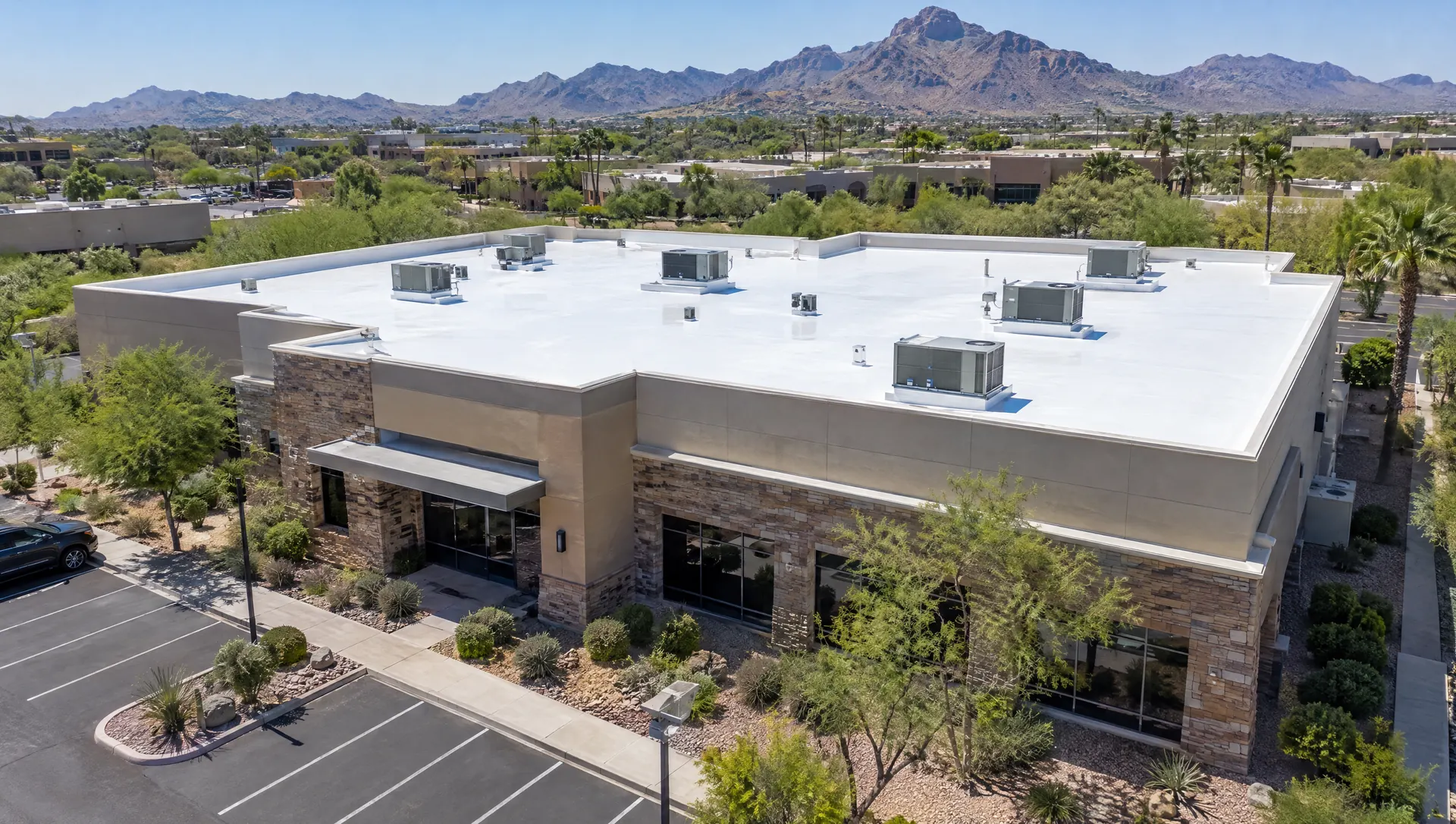
Commercial foam roofing in Scottsdale covers the big flat roofs you see from the freeway: strip centers, office parks, medical buildings, clubhouses and light industrial space. Those roofs carry a lot of equipment, and every curb, pipe and conduit is a place for water to get in.
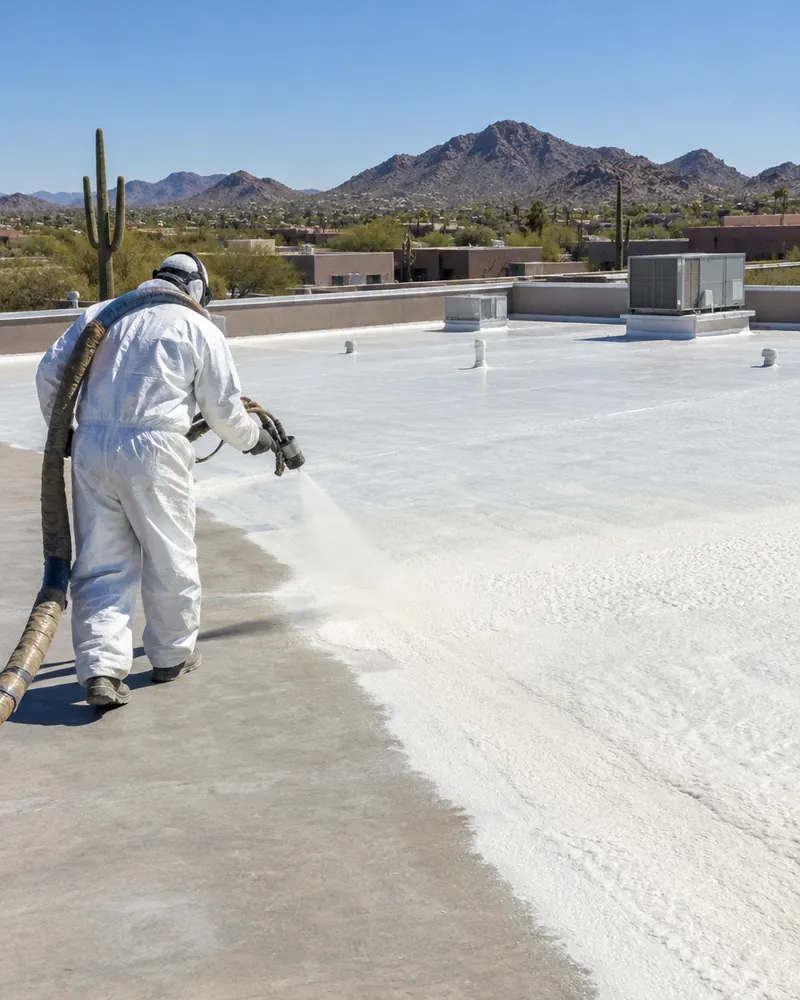
Spray foam handles that well. It's applied as a liquid that wraps each penetration and cures into one surface, and it adds insulation over the whole deck. In many cases it can go over the existing roof, which keeps the building open while the work happens.
Property managers get a moisture survey, a written scope and a schedule built around tenants, deliveries and parking before any work starts.
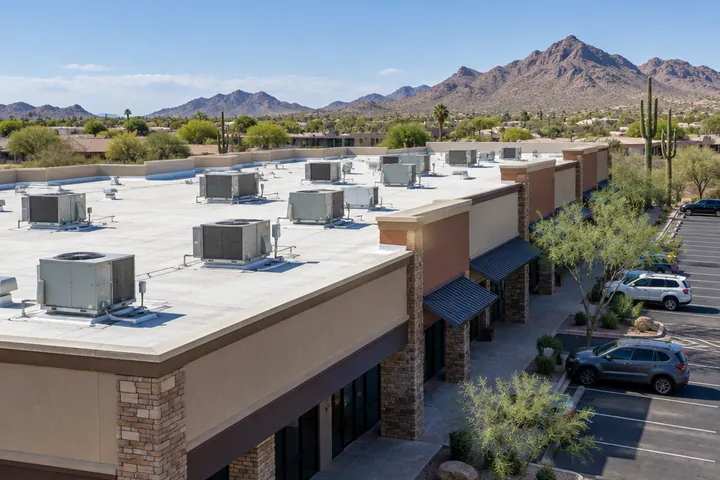
Strip centers and office buildings with rows of rooftop units. We plan spray days around business hours and keep overspray controlled near parked cars.
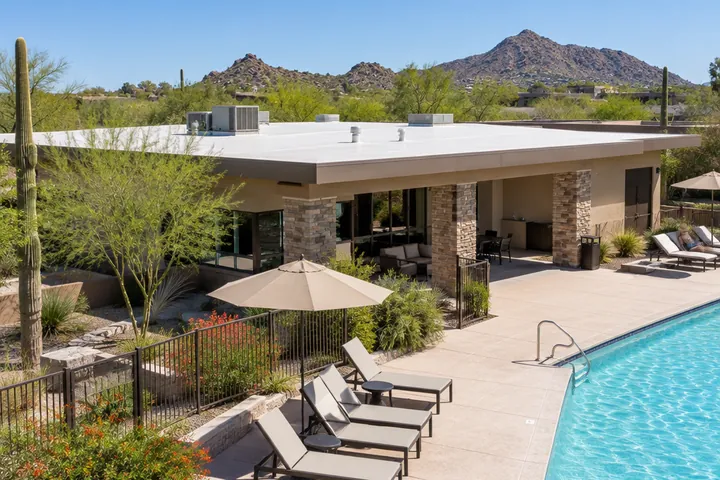
Clubhouses, pool buildings and carports in Scottsdale communities. Boards get a written scope they can share with members.
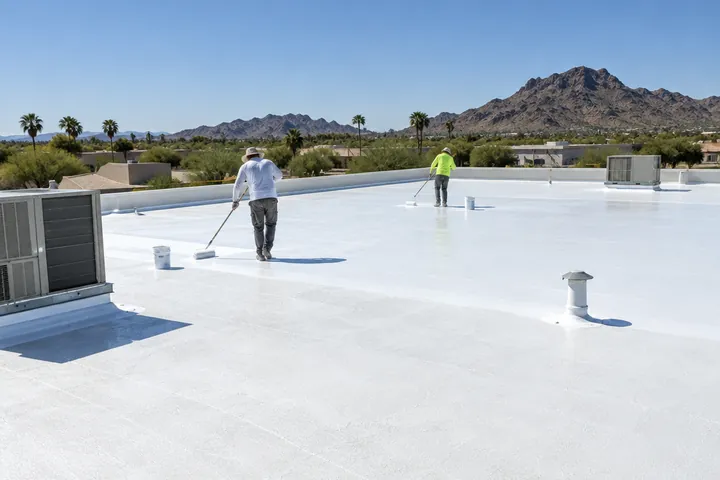
Large open roofs where insulation and a reflective surface can make a real difference to the space below.
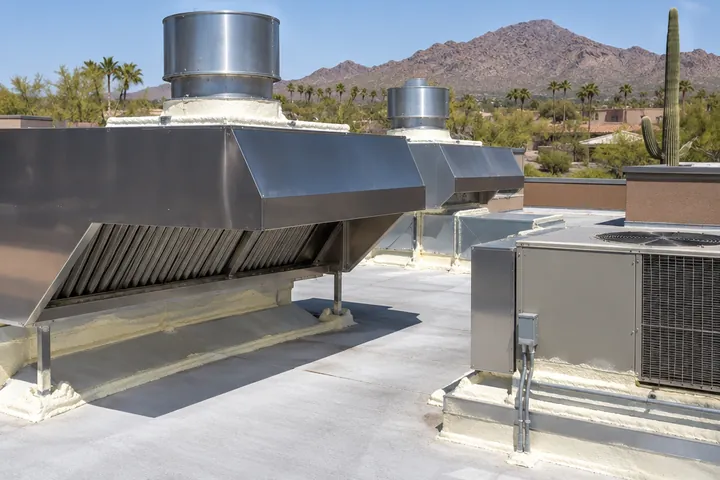
Kitchen exhaust, grease containment and multiple units on one roof. Foam seals around each one without a flashing seam.
| Roof system | Seams | Over existing roof? | Around equipment |
|---|---|---|---|
| Spray foam with coating | None | Often, if the existing roof is dry | Sprayed tight to each curb and pipe |
| Single-ply (TPO, PVC) | Heat-welded seams | Sometimes, with cover board | Pre-made boots and flashing |
| Modified bitumen | Lapped seams | Usually needs tear-off | Flashing strips at each curb |
| Built-up (tar and gravel) | Layered felts | Usually needs tear-off | Pitch pans and flashing |
On a roof with a lot of equipment, the number of seams and flashing details drives the leak risk. Foam reduces both.
Big flat roofs settle and develop low spots. Foam can be tapered to move water toward the drains instead of letting it pond.
Technicians walk to the same units every few months. Walkway coatings or granules on those paths keep the coating from wearing through.
Monsoon storms peak from mid-July to mid-August. Scheduling inspections and repairs before then avoids emergency calls.
Owners and boards want photos, a moisture survey and the coating specs on file. You get those with the job.
Commercial pricing comes down to roof size, the condition of the existing system, the foam thickness needed and the coating chosen. Wet insulation found in a moisture survey has to be removed and replaced before foam goes on.
Access, equipment count, after-hours work and crane needs also affect the number. We give you a written scope and price after a roof inspection, broken out so you can compare it with other bids.
Tell us about the roof and what you're seeing. We'll set up a time to inspect it and talk through options.
Free estimate, no obligation
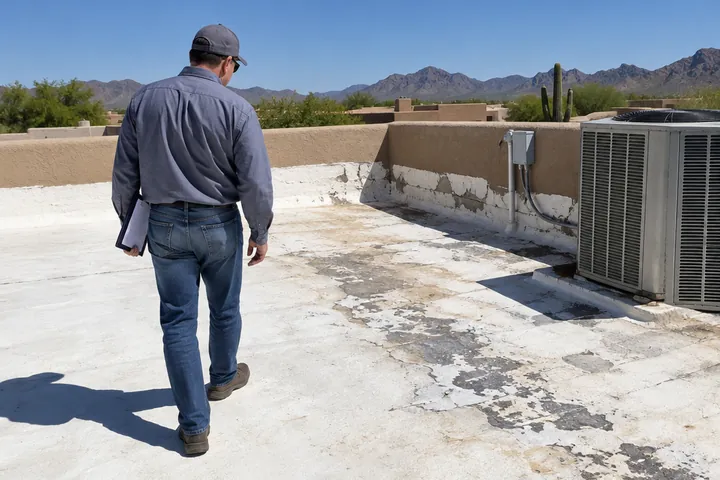
We walk the roof, map equipment and drains, and check the existing layers for trapped moisture.
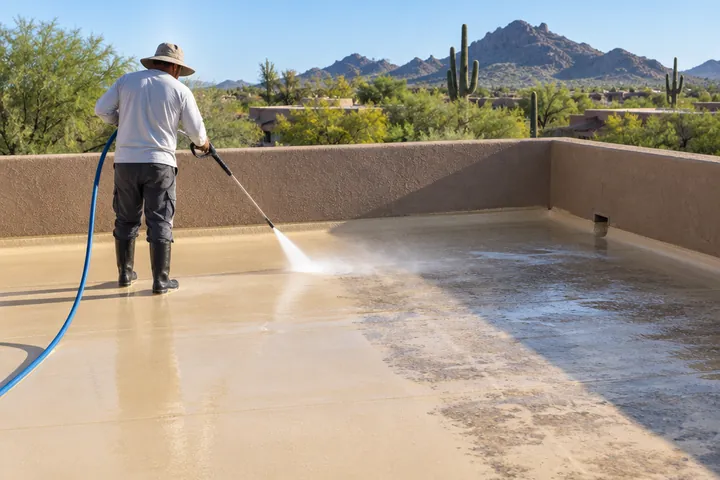
Wet areas come out, the surface is cleaned, and units, vents and nearby cars are protected from overspray.
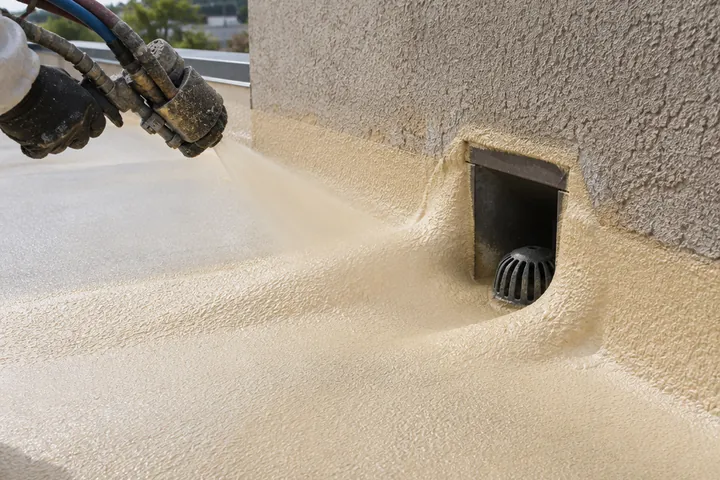
Foam goes down in passes to the specified thickness, tapered at low spots to move water to the drains.
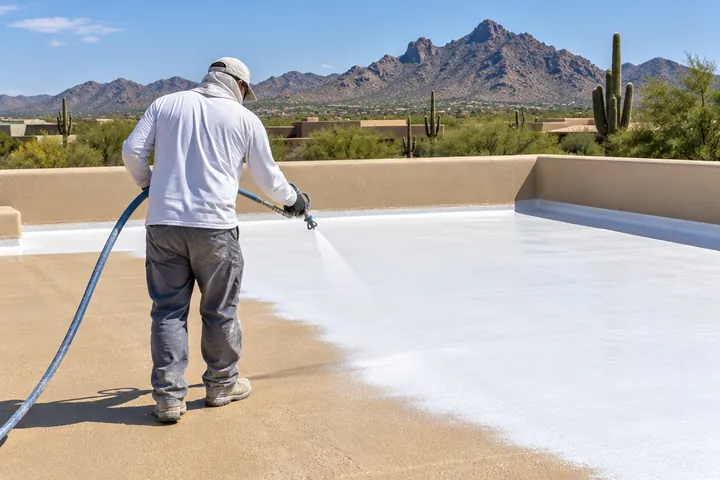
The coating goes on at the specified thickness, and you get photos and product details for your records.
Usually, yes. Most foam roofs go over the existing roof, so the inside stays covered. We plan spray times and staging around tenants and parking.
Yes. We provide a written scope, product data and a schedule that boards and managers can review.
The Spray Polyurethane Foam Alliance's roofing committee advises inspections at least once a year, ideally twice, and after severe weather.
Yes. Units are raised or protected as needed, and foam is sprayed around the curbs and supports so there's no flashing seam.