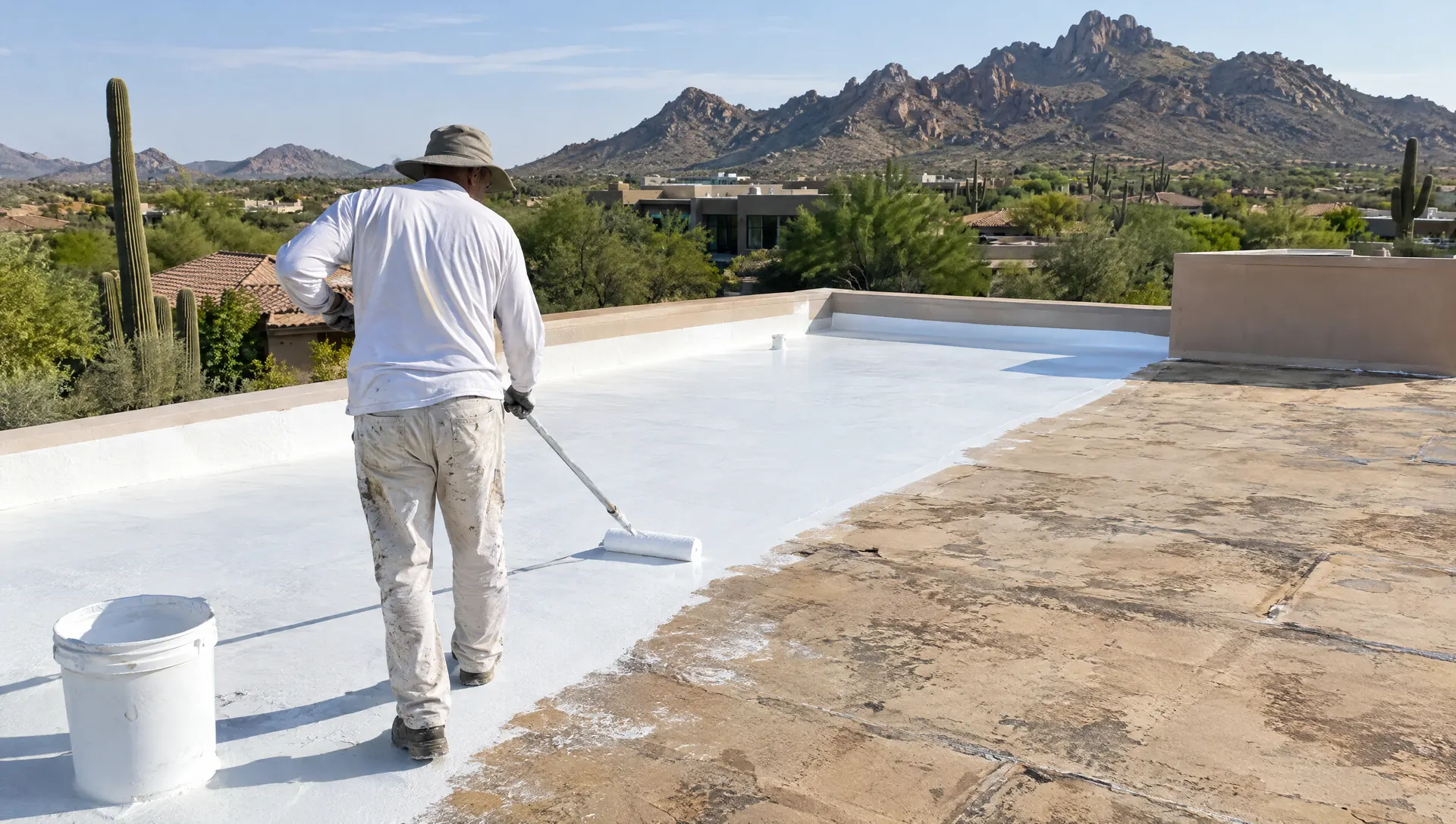
Scottsdale Foam Roof Recoating
Foam Roof Recoating in Scottsdale, AZ
A new protective coat over your existing foam, applied before the sun wears through to the foam underneath.
Scottsdale Foam Roof Recoating
A new protective coat over your existing foam, applied before the sun wears through to the foam underneath.
Foam roof recoating is the maintenance that keeps a foam roof going. The foam itself is the waterproof, insulating layer, but it can't take direct sun. The coating protects it, and Arizona sun wears that coating thin over time.
Recoating on time is far cheaper than replacing foam that has been left exposed. Once the coating is gone, UV starts breaking down the foam surface, which turns crumbly and starts taking on water.
We check how much coating is left, repair any damage, clean the roof and apply a new coat at the thickness the product calls for. You get the product name and thickness in writing.
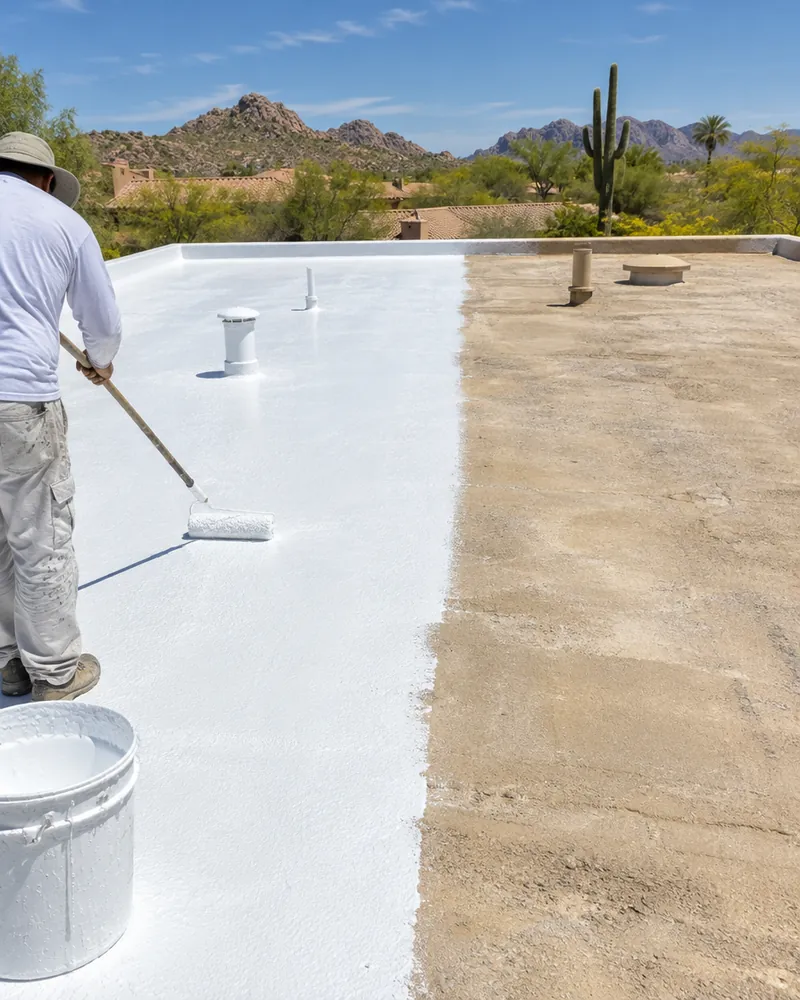
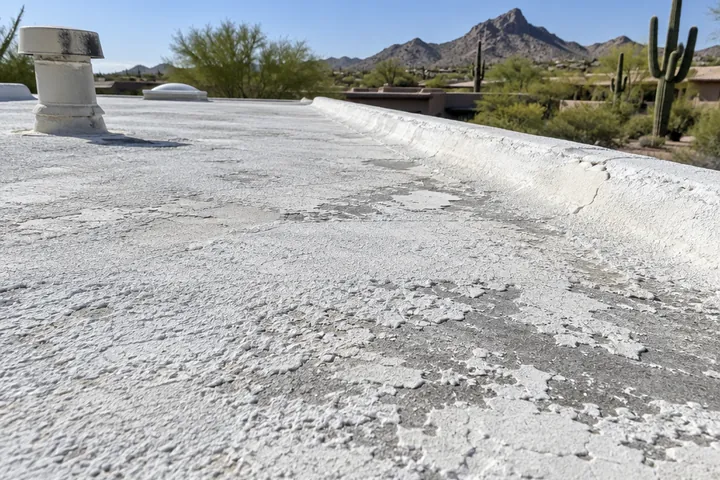
We look for thin spots, chalking and areas where the foam shows through, so the recoat goes on where it's needed most.
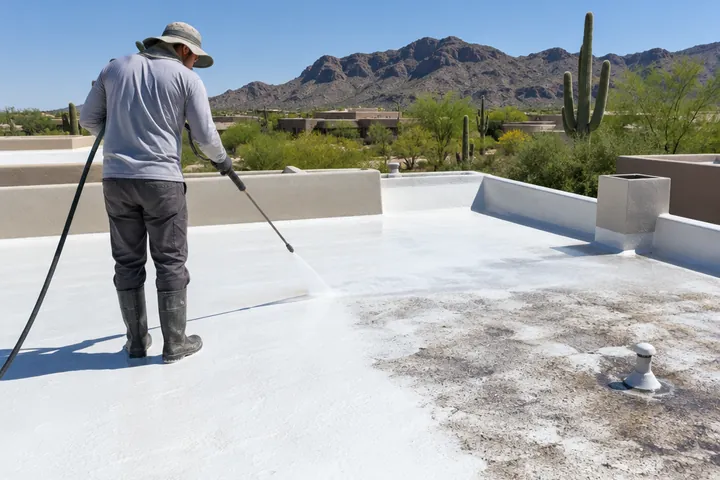
Dust, debris and loose coating come off first. New coating only bonds well to a clean surface.
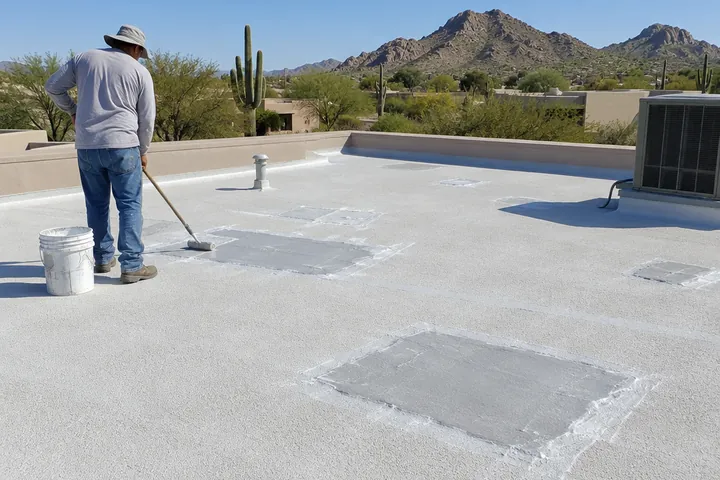
Blisters, punctures and cracks get fixed before the recoat, not buried under it.
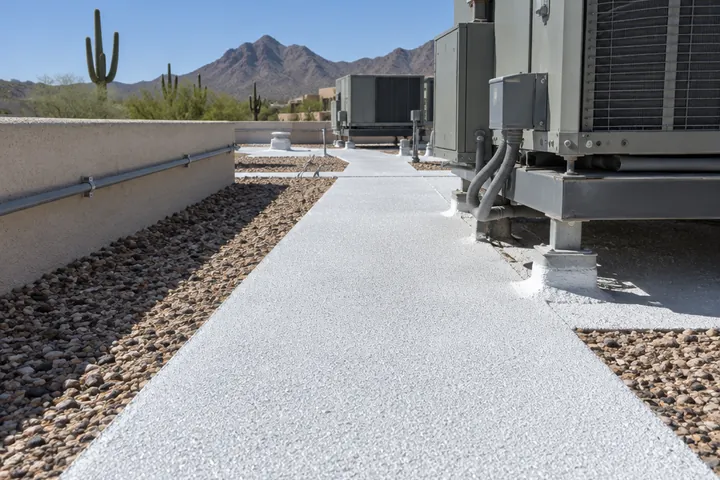
The new coat goes on at the specified thickness. Granules can be added on walkways and around equipment.
| Coating | Ponding water | Dirt pickup | Future recoats |
|---|---|---|---|
| Acrylic elastomeric | Not suited to standing water | Stays cleaner | Recoats with acrylic or silicone |
| Silicone | Handles ponding better | Can hold more dust | Generally recoats with silicone only |
On a roof that drains well, acrylic is a common choice. Where water sits after storms, silicone is often the better fit. We'll tell you which one your roof needs and why.
Tan, brown or orange patches mean the coating has worn away and UV is reaching the foam.
Rub the coating and if it comes off on your hand, it's weathering and getting thinner.
Fine cracking or alligatoring lets water reach the foam below.
Birds go after foam where the coating is thin. More pecks often means the coating is tired.
Recoating cost depends on the roof size, how much repair the foam needs first and which coating goes on. Silicone and acrylic are priced differently, and a thicker specified coat uses more material.
A recoat done while the foam is still in good shape is the least expensive way to keep a foam roof working. Waiting until the foam is damaged turns a recoat into repairs plus a recoat.
Tell us about the roof and what you're seeing. We'll set up a time to inspect it and talk through options.
Free estimate, no obligation
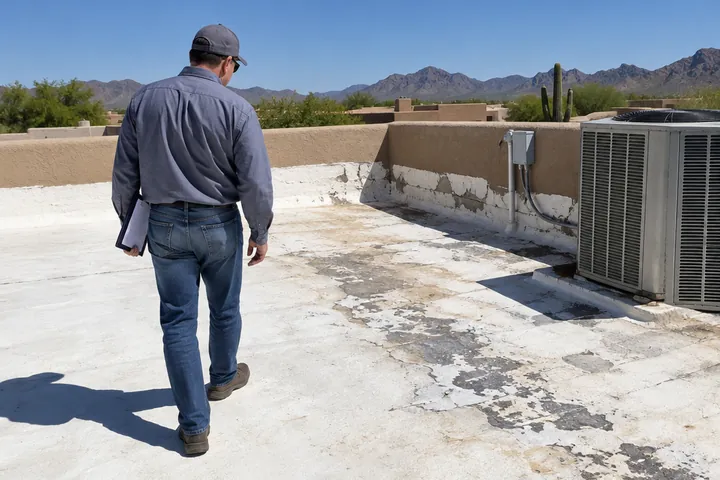
We check coating thickness and condition and mark every repair.
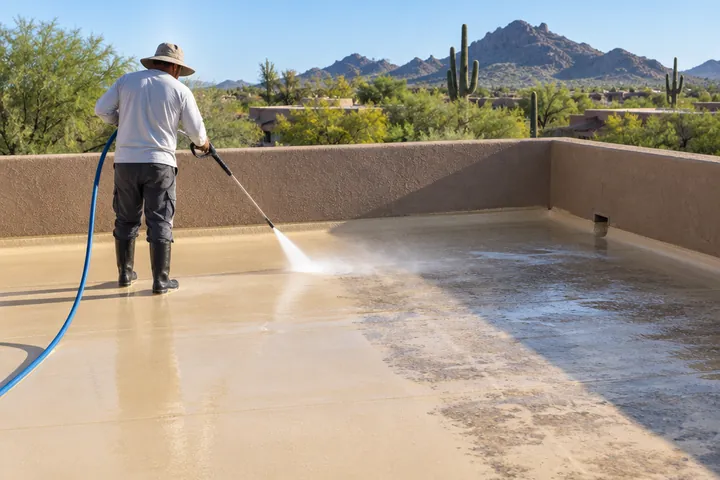
The roof is washed and loose material removed so the new coat bonds.
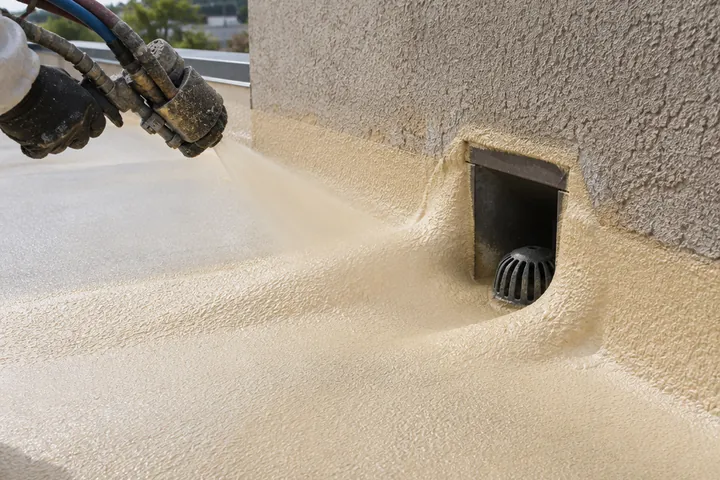
Damaged spots are cut out and rebuilt before any coating goes on.
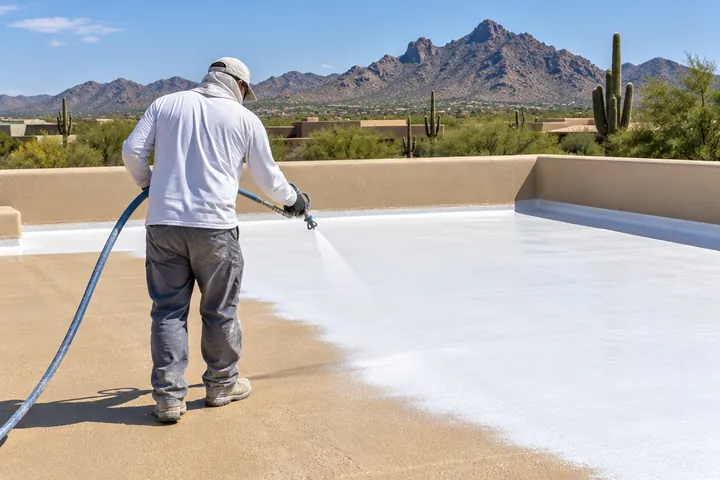
Coating goes on at the specified thickness, with granules where people walk.
There's no fixed calendar. It depends on the coating type, how thick it went on and how much sun the roof gets. Yearly inspections tell you when the coating is getting thin.
Usually only with silicone. Most other coatings don't bond well to an existing silicone surface, so we check what's on the roof first.
Coatings need dry weather to cure, so we avoid scheduling just before monsoon storms. Getting it done in spring keeps the roof protected for summer.
If the foam underneath is still dry and solid, yes. If large areas are wet or degraded, we'll tell you and price the alternatives.